Posts

Showing posts with the label Poetry Reviews

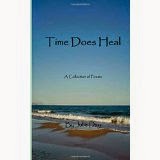
Time Does Heal. A Collection of Poems by Julie Day.
Image
Time Does Heal.  A Collection of Poems by Julie Day. "Life has no meaning when it's devoid of love/ Love is, in fact, what we're all searching for." Julie Day enlightens us with an interesting and positive approach to the tragic end of a relationship and how to deal with the heartache. "Time will heal" is the ultimate answer, a reassurance that it does because for the writer, she has become whole once more.  And for anyone who has suffered similar break-ups you should feel reassured by this anthology of thirty short verses. Young teenagers embracing their first love affair, diving into the unknown with hormones racing all over the place will seek solace in the poet's advice: "Love yourself/ Love who you are/ Love to love/And you'll go far." Julie Day has plenty of gems to offer to ease the heartache so don't despair. She offers an abundance of sound advice. The verses are all extremely personal and document the stages o...

Hunting Snake by Judith Wright.

Image
Sun-warmed in this late season's grace under the autumn's gentlest sky we walked, and froze half-through a pace. The great black snake went reeling by. Head-down, tongue flickering on the trail he quested through the parting grass; sun glazed his curves of diamond scale, and we lost breath to watch him pass. What track he followed, what small food fled living from his fierce intent, we scarecly thought; still as we stood our eyes went with him as he went. Cold, dark and splendid he was gone into the grass that hid his prey. We took a deeper breath of day, looked at each other, and went on. In Australia there are 140 species of land snakes, some equipped with venom more toxic than any other snakes in the world. Bites, however, are quite rare. Fatalities are low: between 4-6 deaths a year. It is interesting to note that 21 out of 25 of the world's most venomous snakes live in Australia. The fierce snake is the inland taipan which is the most poison...

Pied Beauty by Gerard Manley Hopkins part 2.

Image
In line 8 he uses "fickle" a word that means changeable. If a person is fickle he does not have strong loyalties to one person and may fall out of friendship as easily as he falls into it. "Freckled" is another marking (seen on the face and neck), usually it is the sun (during the summer) that will cause the freckles to be visible. Once the summer ends the freckles will fade until the following year.People with light skin or red hair are prone to develop them. Hopkins uses parenthesis and a rhetorical question:"Who knows how?" We don't know how things come about. The poet is referring to lines 7 and 8 but he could also be talking about lines 1-8. In line 9 Hopkins uses words that contrast, three pairs of words, perhaps to develop his point about "counter." He uses alliteration of the s sound with movement, first of all: "swift" (quickly) compared to "slow" the opposite. Then he uses tastes (sensory words): "swee...

Pied Beauty by Gerard Manley Hopkins part 1.

Image
Glory be to God for dappled things- For skies of couple-colour as a brinded cow; For rose-moles all in stipple upon trout that swim; Fresh-firecoal chestnut falls; finches wings: Landscape plotted and pieced-fold, fallow, and plough; And all trades, their gear and tackle and trim. All things counter, original, spare, strange; Whatever is fickle, freckled (who knows how?) With swift, slow; sweet, sour; adazzle, dim; He fathers-forth whose beauty is past change: Praise him. The poem was published in 1918 although it was written in 1877. Hopkins was a Victorian poet who achieved fame when he died (posthumously). It is presented as a compressed sonnet or a curtal sonnet of 11 lines as opposed to a traditional 14-lined sonnet. A traditional sonnet is a love poem and Hopkins' poem is similar in that it praises God for the beauty of nature, it shows his appreciation and acknowledges that God is the creator ("he fathers-forth") of this beauty so he praises him. ...

A Different History by Sujata Bhatt Part 2

Image
                                          Which language                                           has not been the oppressor's tongue?                                           Which language                               ...

A Different History by Sujata Bhatt

Image
                                               Great Pan is not dead;                                                he simply emigrated                                                                   to India...

First Love by John Clare. Part 3 Final.

Image
Stanza 3. Clare begins this stanza with a number of rhetorical devices. The use of nature in "flowers" and "winter" seem to be questioning free will in human terms. Does it really exist? Interpreted in a more natural way, is it winter's choice to want flowers growing? Another paradox. If the weather is cold, flowers will not grow and many will die. Our association of rebirth and renewal of life is in spring. In line 2 he uses the image of "love's bed" referring to the consummation perhaps of a relationship in the marital bed. Is this where love is expressed? How is it linked to the previous line when we might refer to a "bed" of flowers, a number of flowers covering a particular space in the garden or park perhaps? Does this mean that like the bed of flowers love is made up of a number of individual but perhaps very different feelings? The "love's bed" is "always snow." Notice the stress on always and what sn...

First Love by John Clare. Part 2.

Image
Courtesy of Poets' Graves website.     And then my blood rushed to my face And took my eyesight quite away The trees and bushes round the place Seemed midnight at noon day I could not see a single thing Words from my eyes did start They spoke as chords do from the string And blood burnt round my heart     Stanza Two:   Clare uses "And" for the sense of continuity to open this stanza showing further examples of how he has been physically affected as in "my blood rushed to my face" and "took my eyesight quite away" used once again metaphorically. Consider the seriousness of how Clare wants you to empathise with him. The notion of being blinded is reminiscent of Cupid-symbolic of love - blindfolded and hence unable to see. The third line refers briefly to nature in the sense of "trees and bushes." It seems that Clare is aware of the background but when he tells you that there "seemed midnight at noon day...

First Love by John Clare

Image
                                                 Courtesy of the Poets' Graves website. "A POET IS BORN NOT MADE." Overview and Stanza 1. "First Love" is simply a poem expressing Clare's love for M ary Joyce. There is evidence that the poem is based on one by Yeats with the same title. This is not uncommon amongst writers. Unfortunately, Joyce's family stopped the relationship from developing and he married Martha (Patty) Turner in 1820 and they had seven children but he was unhappy. The end of his life was tragic and he was institutionalised in an asylum where he died in 1864. Structure: The poem is written in three stanzas. Clare was a 19th Century poet; English critics consider him to be among the most important poets of the 19th Centu...

Continuum. Allen Curnow.

Image
The word continuum refers to a link between two things or a continuous series of things that blend into each other so gradually and seamlessly that it is impossible to say where one becomes the next. This is what the poet is trying to achieve through creating poetry, continuous ideas and this poem shows his frustration when he feels that nature is hindering his creativity. One of the things that Curnow liked doing was to capture the essence of a child by showing the childlike engagement  a child might have with its environment. The first stanza shows his childlike humour in the way he depicts the moon which "rolls" and "falls." Even the language is simplistic. like that of a child. " All poems are rash acts." Allen Curnow. The persona/poet is unable to get off to sleep, "off the subject" or "off the planet." He can't stop thinking either. He goes outside barefooted into the "washed out creation." The sky has prob...

Wordsworth and the Lucy Poems.

Image
William Wordsworth was one of the Romantic poets. He was born in 1770 and died in 1850. In 1843 he became the Poet Laureate. These three poems adopt a simple ballad technique. We can assume that Lucy was an unknown pauper. It may seem unusual for a well-known poet to write about a girl who lived an insignificant existence and died without anyone knowing or caring-other than the poet. Wordsworth lived in France for a year and he made a series of tours into Europe and he refers to his foreign travels here.  He was a poet of man and  nature who gained an "unfailing source of joy and purest passion" from writing about this. What is interesting is that he remained a "champion" of the poor and humble hence his choice of characters and here we mean Lucy. Charles Dickens did the same thing just like many other writers. In Auden's poem The Unknown Citizen  you have the same idea. In Lucy 1  the persona is most likely the poet. In line 2 he refers to a place outside ...